

GRAFTING CLASSIFICATION
Here we will present a practical classification that includes mainly all the important methods of grafting:
1) According to the time of grafting can be:
-Winter
-Spring
-summer and
-Autumn
2) According to the degree of maturity of the components:
-grafting on the green
-planting to mature
3) According to the method of using the tribe:
- a) bud grafting
-a look at the dormant bud
-eye on the awake bud
- b) twig grafting
-separate twig (part of a twig)
-unseparated twig (ablation)
4) According to the place of grafting:
- a) room grafting
- b) grafting in the plant
- c) grafting in the nursery and seminary
- d) grafting in an orchard
-grafting the substrate in a permanent place
-planting fruit trees
-special grafting method
5) According to the method of using the substrate:
- a) grafting on parts of the substrate
- b) grafting at the root neck
- c) grafting at the height of the crown
- d) grafting in the crown
6) According to the number of grafts on the substrate
- a) grafting performed once (once)
- b) grafting performed twice (double – with an intermediary)
7) According to the goal we want to achieve:
- a) for the production of fruit seedlings
- b) for the purpose of raising orchards
- c) to improve orchards (grafting)
- d) grafting for special purposes
Something about grafting substrates
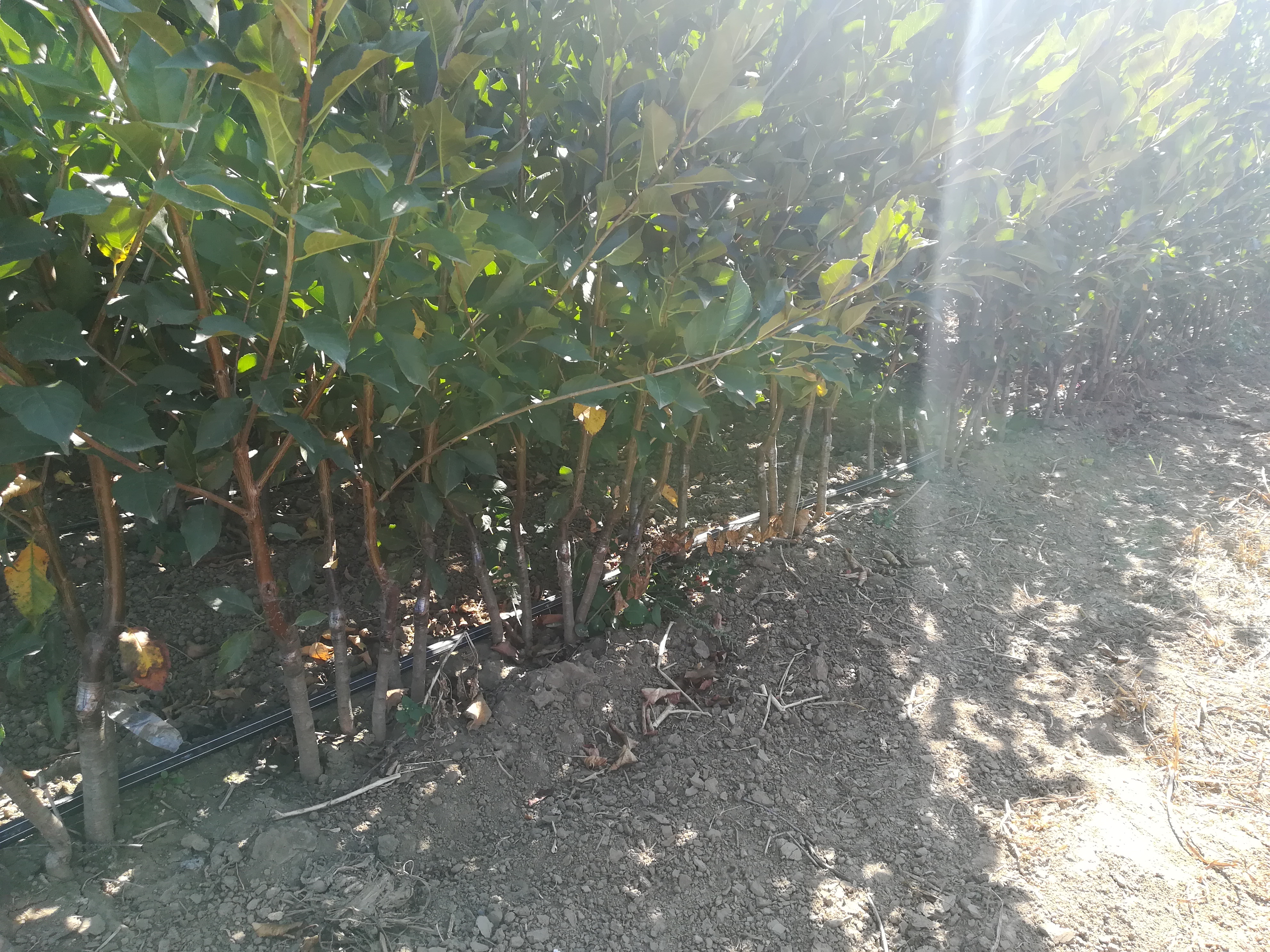
The rootstock is a fruit produced by a generative or vegetative way on which a noble variety is grafted. How we chose the substrate depends not only on the success of grafting but also the yield in fruit production. Substrates obtained generatively are called seedlings (savages), and substrates obtained generatively are called saplings (clones).
Seedlings and saplings behave differently towards seedlings of the same variety and in the same agroecological conditions. The task of the fruit grower is to bring all three factors, the substrate, the variety and the agro-ecological factors into the most favorable relationship.
Generative rootstocks (seedlings, game) are characterized by a large number of ecotypes. Among them, there is great inconsistency, heterogeneity and variability in terms of morphological and physiological characteristics. This is one of the very unfavorable features, as they transfer their inequality to the coil.
Therefore, uneven growth and thickness of seedlings is easily noticed. Inequality of seedlings occurs because the seed is obtained by spontaneous crossing in wider populations.
Vegetative rootstocks (shoots) are uniform in their morphological, genotypic and physiological characteristics. They transfer their properties to the cutting and then to the adult fruit.
Fruits on vegetative bases produce earlier, more abundantly and regularly. They give more uniform fruits of better quality, but they are less lush and have a shorter lifespan. Young shoots enable dense planting, and low trees enable the application of various cultivation systems and complete mechanized agricultural techniques in the orchard. Grafting in various ways gives a good percentage of reception.
The root system of these substrates is shallower, but more developed and they require more fertile and moderately moist soils. Due to the shallow root, they are sensitive to lack of water and must be watered in dry weather.
Grafting twig graft
The coil-branch (plemka, pelcer) is a very important component of the coil. From it, the above-ground organs of the fruit are obtained, most often the trunk and the crown. The coil of twigs is a part of an annual litter with wooden or mixed buds, depending on the species.
If the grafting is done on a awake bud, a bud from the vegetation, we use a branch that has not passed the entire annual development cycle, but has mature buds. For mature grafting, a part of a twig with several buds, two to four buds, is taken. The terminal part of the twig with several buds is also taken. And when it is grafted with the eye, then only the bud is taken.
Conditions for grafting success
Success of grafting depends on the affinity of the rootstock and the rootstock, the time of grafting and the life activity of the rootstock and the rootstock, the quality of the rootstock and cuttings, contact at the joint, the health of the rootstock and the cuttings, weather conditions, accessories or tape with which grafting is performed.
Affinity of rootstock and tribe. It is conditioned by their kinship. The better the relationship, the more successful the grafting will be. Care must be taken that the selected combinations are botanically medium. This is the case with varieties and rootstocks of the same species or related species.
Grafting time and life activity of rootstock and seedlings. Fruit trees can be grafted in all seasons and in various ecological conditions.
Grafting in the winter or early spring in our conditions is done in appropriate rooms. The success of grafting depends on the proper regulation of temperature and humidity in the rooms.
In the spring, it is usually grafted outside, before the beginning or during the vegetation. Grafting success depends on the outside temperature. The spring months are the most suitable for successful grafting on the mature one, because that is when the greatest activity of the cambium and the movement of juices begins.
Summer and autumn grafting is done at the time of strong vegetation or when it begins to end. Then the temperature is usually favorable. If the soil and air humidity is insufficient, the physiological activity of the substrate may decrease, thus significantly reducing the possibility of receiving coils.
Grafting should be avoided when the rootstocks are growing most intensively, because it happens that due to the strong influx of juices, the cambium forms a loose and tender callus. Then there may be rejection of the bud when sprouting or twigs when grafted to mature.